
In a fight, where split-seconds determine the outcome, physical power and conditioning are only half the equation. The other, often underestimated, half is a fighter’s ability to process information, make decisions under extreme pressure, and adapt in real-time. That skill is called – Fight IQ (F-IQ) -the cognitive elite of combat sports. Fighting is not chaos; it is Calculated Chaos, where the predictive mind will always overcome mere mechanical muscle.
Defining Cognitive Architecture in Combat
Fight IQ is not innate instinct, but a learned, structural ability to manage the battlefield. It is the integration of prediction, analysis, and strategic planning within a dynamic environment.
Beyond Instinct: The Difference Between F-IQ and Reflex
Many confuse F-IQ with reflex. A reflex is an automatic response deep-rooted within our neurosystem (e.g., pulling the head back from a punch) stored in muscle memory. F-IQ goes further:
- Reflex: Evading a punch.
- F-IQ: Understanding why the opponent threw that punch at that specific time (timing), and exploiting that information to launch a counter-attack into the defensive gap created.
F-IQ enables the prediction of sequences, rather than simply reacting to a single movement.
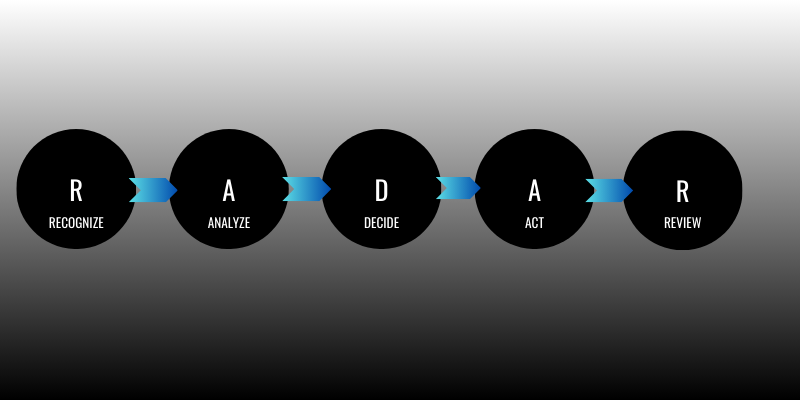
The R.A.D.A.R. Model of Decision Making
We propose the R.A.D.A.R. Model as a simplified blueprint for how elites process information inside the cage:
- R – Recognize: Identifying patterns and defensive vulnerabilities (e.g., the hand dropping after a left straight, or, to be specific, a behavioral tell such as shorts adjusting by Dustin Poirier).
- A – Analyze: Assessing immediate threats and opportunities in a fraction of a second.
- D – Decide: Swiftly selecting the optimal tactical response (Execute the move / Change range).
- A – Act: Executing the chosen technique with precision.
- R – Review: Immediately evaluating the action’s result and adapting for the next sequence.
The Role of ‘Quiet Eye’ in Elite Striking
Fighters with the highest F-IQ often demonstrate the “Quiet Eye” phenomenon. This is the ability to maintain a long, stable gaze on a critical point on the opponent’s body (e.g., chest or lead shoulder) just before making a key decision. This minimizes information noise, allows for the detection of minimal movement cues (twitches), and maximizes attack precision.
Cognitive Biases and Their Impact on Fight Outcome
Even the highest F-IQ can be undermined by software errors – cognitive biases that are amplified by stress.
Confirmation Bias: Why Fighters Stick to a Broken Plan
Confirmation bias is the tendency to interpret information in a way that confirms existing beliefs. In MMA, it manifests when:
A fighter assumes their “power punch” will eventually knock out the opponent and ignores the fact that their leg defense is porous. They continue hunting for the knockout blow instead of adapting to tactics that are working for their opponent.
Stubborn adherence to the initial game plan despite clear failure is often a sign of low F-IQ.
Loss Aversion: The Fear of Committing to Offense
Loss aversion is the psychological mechanism where the fear of losing something is twice as powerful as the desire to gain something of equal value. In combat, this means:
A fighter fears losing energy or position (e.g., after a failed takedown attempt) more than they desire finishing the fight. This leads to decision paralysis, defensive clinches, and a fear of full offensive commitment, ultimately resulting in a loss on the scorecards or even a KO loss.
Tactical Intelligence in Practice: Case Studies
To illustrate F-IQ, we must look at two extremes: masters of adaptation versus victims of routine:
The Master of Adaptation – Israel Adesanya
The perfect example of a high F-IQ fighter is Israel Adesanya in his championship bout against Paulo Costa. Costa’s strategy was simple, yet dangerous: to close the distance and execute a high-volume, brawling attack – a strategy summarized as: “cut the distance and make a bar fight.” Adesanya’s superior cognitive execution allowed him to dismantle this predictable plan immediately.
From the first round, Izzy utilized every low-impact leg kick technique known – from classic leg kicks to specialized calf kicks and oblique kicks – landing a surgical total of 26 out of 27 thrown on Costa’s lead leg. This surgical, consistent attrition served two critical F-IQ functions:
- Tactical Neutralization: It completely eliminated Costa’s most dangerous weapon – his ability to plant his feet and generate powerful forward pressure.
- Psychological Warfare: The consistent, low-damage impact of the oblique kicks forced Costa into a hesitant, passive stance, draining his confidence and forcing him to abandon his primary game plan entirely.
This execution demonstrated that Adesanya did not rely on brute strength but on the calculated application of information, proving that a superior cognitive approach can neutralize physical aggression.
The Predictable Approach – Michael Chandler
Michael Chandler is the embodiment of raw power and explosive output, yet his reliance on overwhelming forward pressure often serves as his greatest tactical vulnerability. While his physical assets are elite, his approach frequently demonstrates a lower cognitive ceiling against durable, high-F-IQ opponents.
Chandler often falls victim to a self-imposed form of Confirmation Bias. His deep-rooted belief that sheer pace and power will break any opponent leads him to double down on offense, even when the opponent (e.g., Charles Oliveira or Dustin Poirier) is clearly weathering the storm and gathering data.
The Cost of the “All-or-Nothing” Approach – Justin Gaethje
This predictable, aggressive commitment fails the R.A.D.A.R. model at the Analyze and Review stages. His fight against Justin Gaethje provides the ultimate clinical example.
Chandler began the bout with an extraordinary offensive burst, overwhelming Gaethje and winning the first round through sheer volume and aggression. However, his low F-IQ execution became apparent from the second round onward:
- Failure to Convert: Chandler failed to secure a finish or transition to wrestling after his initial success, immediately revealing a lack of a viable Plan B.
- Energy Management vs. Output: He maintained the same unsustainable, maximum pace, driven by the Confirmation Bias that he must force the finish. This rapid expenditure of energy was a strategic error that high-F-IQ opponents anticipate and exploit.
- Lack of Distance Management: By failing to manage distance and reset, he allowed Gaethje to recover, find his timing, and apply punishing leg kicks in the later rounds while Chandler’s output dramatically declined due to fatigue.
In essence, Chandler defeated himself by prioritizing brute force execution over strategic intelligence. He gave a durable opponent precisely what he needed: time to survive the initial chaos and capitalize on Chandler’s predictable output decline.